Moreton...
Picturesque Moreton is most famous as the final resting place of “Lawrence of Arabia”.
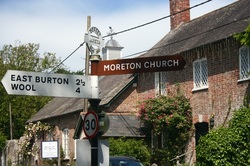
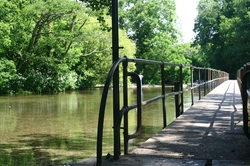
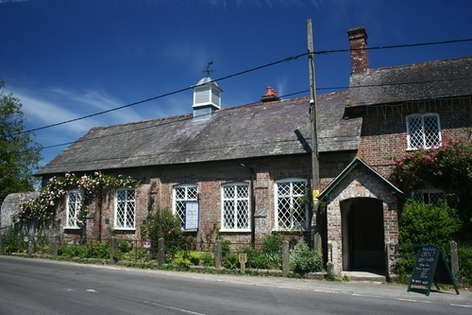
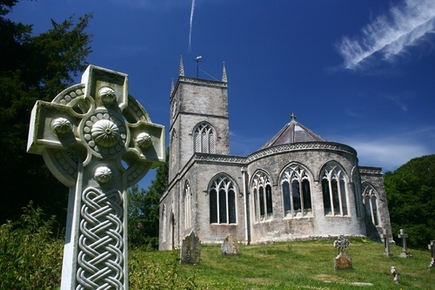
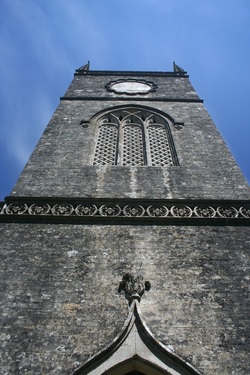
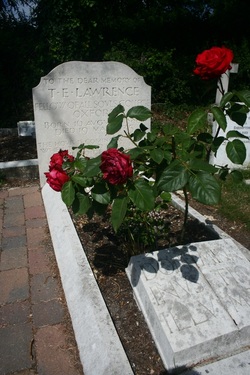
T E Lawrence, who lived just up the road at Clouds Hill, often visited this quiet village halfway between Dorchester and Wareham. Lawrence, who died in 1935 in a motorcycle crash on the road between Clouds Hill and Bovington, came to Moreton for meals and relaxation after he joined the Tank Corp under the assumed name of T E Shaw. For a man who came to Dorset to escape the trappings of fame and the intrusions of the press, Lawrence’s funeral at St Nicholas Church Moreton attracted an impressive array of dignitaries and writers of the day. The most well known of whom now would probably be Winston Churchill. Lawrence’s grave lies not in the Churchyard itself, but across the village in a small, rectangular cemetery. Here the oft-visited resting place of one of Britain’s greatest modern legends of warfare and literature, nestles incongruously alongside memorials simple and less so of the families of Moreton and the lands surrounding. Today, Moreton has as peaceful and sleepy an air as any Modern Dorset village can. But it wasn’t always so. Five years after Churchill’s visit to mourn a hero of one World War, the village fell victim to the ravages of the second. On 8 October 1940 a German bomb, probably intended for nearby RAF Warmwell (now defunct), caused serious damage to the Church of St Nicholas. The 18th Century building was all but destroyed and every piece of glass blown out. Sad though this was, after the war the Church was repaired and rebuilt and the parishioners commissioned a man called Laurence Whistler to design and make new windows of engraved glass. The result, especially on a sunny day, is a spectacle worth seeing. As is the rest of Moreton itself. There are walks to be had in the woods nearby and a ford and footbridge across the River Frome worthy of a Constable oil painting. The village itself forms part of the “Lawrence of Arabia Walking Trail” and whilst you can’t help thinking that the man himself would either loath or laugh at the idea, it is a good series of inland walks taking in Bovington, Clouds Hill, Moreton Church and Lawrence’s grave. Broken into four shorter sections the trail totals just under seven miles. Pretty though it is, without the link to Lawrence, Moreton would probably attract fewer visitors than it does. Like many villages in Dorset and the rest of the country, Moreton shows all the signs of the challenges that pretty, rural settlements often face. Its Post Office is closed and its school shut down. The latter has now been converted into an excellent tea room, with a varied menu from full-scale lunch to tea and cake. The decor retains much of the old schoolrooms and harks back to an age when Lawrence himself found peace and respite in this rural community. Moreton was changed by its association with Lawrence both man and legend. For a brief while, his fame pulled this tiny village and community into the national and international spotlight. In this sense it is, perhaps, fitting that many decades after his death, the man, legend and village share an almost symbiotic existence. Those who know the legend come to Moreton and discover the village, whilst those who visit the village, often grow to know the legend. The man, or at least his remains, lies with a select handful of others who have been lucky enough to call Moreton and its environs their home. Whilst he has gone the way of all things mortal, you can’t help thinking that whilst either Moreton or the “Lawrence of Arabia” legend remain, each will imbue the other with an immortality they both deserve - for very different reasons. |
Lawrence’s grave lies not in the Churchyard itself, but across the village in a small, rectangular cemetery..."
|