Dorchester...
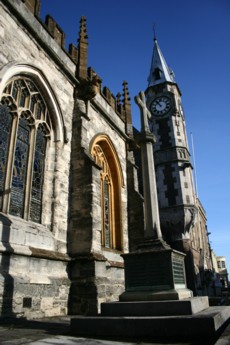
Dorchester is Dorset’s County Town and has an appropriately long and proud history to match. It’s also quite beautiful.
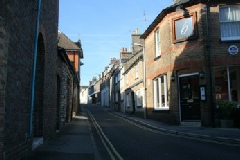
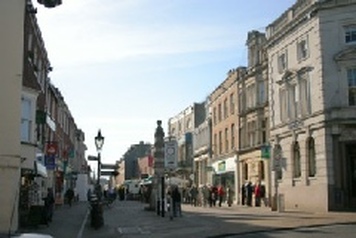
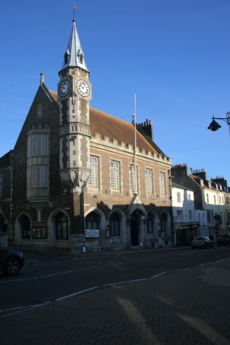
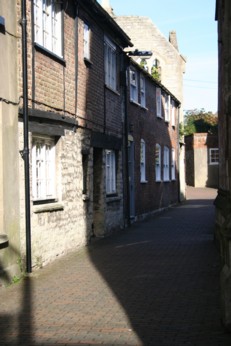
Much of “modern” Dorchester stands on and over the remains of Celtic and Roman settlements, whilst the whole of the surrounding area is peppered with archeological sites spanning the last 2,000 years and beyond. Poundbury Fort, Maiden Castle and the Maumbury Ring Roman amphitheatre are just a few of the more visible reminders of the ancient peoples who once populated this part of Dorset, making it a centre for trade, local government and military power. The ancient Brits were the first to make a visible impression on the landscape with their massive earthworks. Once they’d been crushed by the superior might of the Romans, the Romans, in turn, built Durnovaria where Dorchester now is. Both peoples chose well. Militarily, Dorchester is a relatively high point and so would have been reasonably easy to defend. It also sits on the main route North from the port of Weymouth and on a natural East-West route and so would also have been strategically important for traders as well as soldiers. “Modern” Dorchester, is a mix of the old and the new. If retail therapy is your thing, you’ll find many of the big names represented in the main shopping streets at the centre of town. But this is not your average faceless, characterless shopping precinct. The centre of Dorchester is a charming place to visit for shopping, coffee, eats or just to wander. Many of the buildings, which now house shops, coffee houses, restaurants and offices, have a long history and their design and, at times, disordered placement have ensured that the public face of many parts of the town have been relatively unchanged for well over a hundred years. Fans of Thomas Hardy, one of the County Town’s most famous former residents, and one of Britain’s greatest authors, will enjoy walking around the town picking out buildings and places that featured in his novels. This is Hardy’s “Casterbridge”, the centre for several of his greatest works. You can still see today, the Corn Exchange where Bathsheba Everdene, the considerably flawed heroine of “Far From the Madding Crowd”, went to trade her grain, to the shock of the more staid figures of the “fictional” male “establishment” of the time. And a few doors down the road, you can still take a drink and a bite to eat in the very bar frequented by Hardy’s rags-to-riches-to-rags anti-hero, Michael Henchard. He sold his wife while under the influence of local beer and “furmity”. You won’t find furmity - a sort of alcoholic porridge - on sale at the fictional “Mayor of Casterbridge’s” real life haunts today, but you will find great beer on sale in any of Dorchester’s many and varied historic pubs. And there’s a host of other Hardy venues you can visit in and around Dorchester, not least his birthplace-cottage on the heathland at Higher Bockhampton and the beautiful riverside walk featured in “Under the Greenwood Tree” from Lower Bockhampton to Stinsford. Even within the confines of Dorchester itself and radiating out from it you’ll find a mix of urban, rural and riverside walks which show off the town’s heritage to its very best. From the cramped and winding streets of Fordington to the leafy seclusion of the walk along the River Frome. This skirts behind the town to the North, just below the prison - yet another Hardy location! It is said that the young Hardy watched the public hanging of Martha Brown here, providing at least some of the inspiration for his deeply tragic tale of “Tess of the D’Urbevilles”. There’s masses to see and do around Dorchester besides Hardy, but whatever you do, and wherever you do it, you won’t be far from Hardy or the strange and often tragic world about which he wrote. For more about the real town of Dorchester and the peoples who have populated it for the last two millennia, you can’t do better than visit the Dorset County Museum. This contains a wealth of fascinating artefacts and displays about the area from its unique geology to the people and events that have helped to shape it -including a fully recreated version of Thomas Hardy’s study using his own furniture and books. Other places you might like to visit include: the Dorchester Market, held every Wednesday; the Dinosaur Museum and Teddy Bear Museum; the Roman amphitheatre at Maumbury Rings; the Old Crown Court; and Poundbury. The market, once a largely agricultural affair where local farmers traded animals and crops, is now predominantly an event for consumers and traders. But it is still mostly open air, which always adds a little extra something to any shopper’s quest for bargains. The Dinosaur and Teddy Bear Museums are interesting diversions for children, especially on wet days. Maumbury Rings was once right on the edge of Dorchester, but has gradually been absorbed within it. The rings themselves were originally an Iron Age Henge but were re-profiled, recycled and presumably re-marketed by the Romans as an amphitheatre. The Old Court House and cells is a much later historic site, but arguably of greater historical significance. It was here that the “Tolpuddle Martyrs” were tried and sentenced to deportation to Australia through a huge miscarriage of justice. The “Martyrs” who had dared to stand up for their rights at a time of appallingly low wages for farm labourers were convicted of having “sworn a secret oath”. In fact no such law existed and the case, and the men and families involved in it, are said to have been responsible for the birth of trade unions. Finally Poundbury, this is both an ancient hill fort of less ambitious scale than Maiden Castle, and also a new housing development built on a “model” conceived by Prince Charles. Both are equally interesting to visit. One blends delicately into the local landscape while the other dominates and sprawls over it! Judge for yourself which is which! |
Dorchester is Dorset’s County Town and has an appropriately long and proud history to match. ..."
|