Lyme Regis...
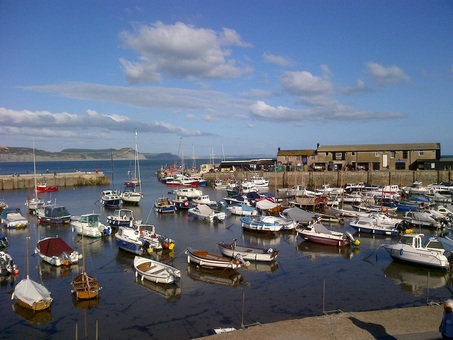
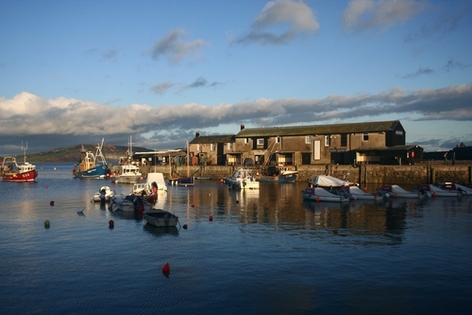
Lyme Regis is a Dorset treasure. Along with Durdle Door, Gold Hill and the Cerne Abbas Giant, the picturesque harbour at Lyme Regis is one of the iconic images of the County.
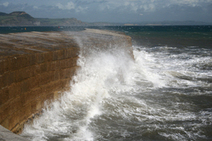
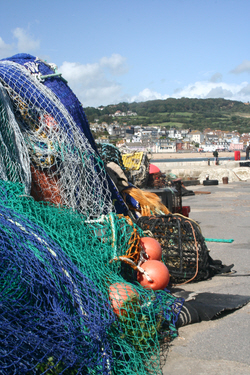
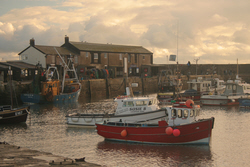
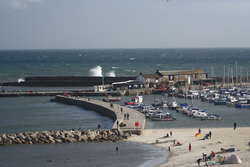
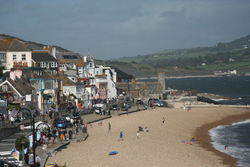
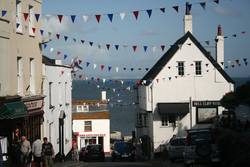
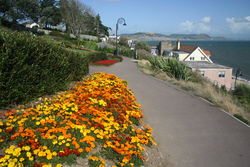
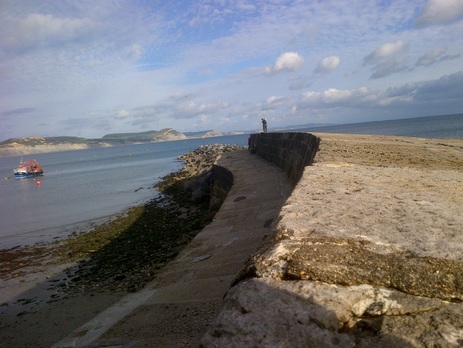
Seen by millions worldwide through the film “The French Lieutenant’s Woman”, the storm-lashed Cobb, with a caped and hooded Meryl Streep standing upon it, provided a magnificent and scenic backdrop to the Oscar-and Golden Globe-nominated movie. It also put this small Dorset coastal town on the world map -but not for the first time. This seemingly sleepy and quaint resort, clinging tenaciously to the treacherously unstable clay cliffs of the most westerly stretch of the Dorset Jurassic Coast, has a rich and sometimes bloody history that has influenced events national and global for centuries. For although Lyme Regis is small in size, in historical terms, it packs a hefty punch! But you don’t need to be a history buff to enjoy Lyme Regis. Casual visitors of any age will find exploring this beautiful little town in the bottom left-hand corner of Dorset lots of fun. For many, the most famous and readily recognised part of the town will be the Cobb. This beautiful, hard, grey, sea defence and harbour curves, almost lovingly around nestling clusters of boats. Pleasure craft and fishing vessels alike use the harbour at Lyme Regis as both home and refuge, but the Cobb is also a wonderful place to walk. You’d have to be fairly mad to walk along the harbour wall in rough and windy weather because the chances of getting knocked off would be fairly high, which is why, so the story goes, Meryl Streep wasn’t allowed to. Apparently for the storm sequences of the film they sent out a man in a cape rather than the French Lieutenant’s Woman herself! In a way, that’s the whole point. The Cobb at Lyme Regis is beautiful with or without Streep! In fair weather or foul it’s a place for a gentle stroll that gives excellent views of the harbour, the sea, Lyme Regis and a big chunk of the Jurassic Coast. As far as this particular bit of cinema history is concerned, Meryl Streep was but a cameo-player in a scene in which the Cobb was the star. Lyme Regis is a town of many parts. The Cobb, has a distinctly workaday feel of yesteryear about it with fishing nets, lobster- and crab-pots left in piles on the quay. There’s the RNLI lifeboat house and slipway. But there is also a stretch of sand that joins the Cobb to the mainland and marries the seafaring part of the town to the bits now used for holidays. This small patch of sand stretches east to join the shingle beach that runs along Marine Parade, the town’s major piece of sea front. Here there are hotels, B&Bs, cafés and ice-cream sellers - the usual, traditional English seaside fare, but in a quaint and pocket-sized version. There are also some newly replanted gardens, with scenic walks and places to sit. The main reason the gardens are new, is that the old ones had to be extensively dug up to allow massive public works to underpin the ground on which they stand. Without that work, there was a real danger that substantial chunks of the town would have gradually collapsed or slipped into the sea. As it is, several buildings had already been condemned! There’s a little irony that the shifting cliffs of Lyme Regis could have ended the existence of some parts of the town, because in many ways, that very instability has helped to sustain the town and its people for many years. Lyme Regis is famous the world over for its fossils and fossil hunters - and there are two things that have made that possible. The first is that the fossils are there at all, embedded in 180 million-year-old Jurassic clay and rocks. The second is that the sea is continually eroding those clays and rocks like a giant bacon slicer making sure that “new” fossils are continuously being exposed. That lucky combination of circumstances changed Lyme Regis, but also helped to change the world, or at least how the world thinks about science, history and even religion. Today, most of us take for granted the existence in prehistory of dinosaurs and other amazing creatures and that somehow they became extinct. Less than 200 years ago much of this was new and even heretical thinking to a world built around biblical certainties. Fossil finds at Lyme Regis and elsewhere began to fuel the interest of a growing number of scientists seeking to piece together the massive jigsaw of what we now call the fossil record. This growing scientific interest meant opportunities to make money for fossil hunters. Local people could supplement their income by selling their finds to scientists and other wealthier enthusiasts and collectors. One of the most remarkable and famous of these local fossil hunters was Mary Anning. Her life-story is amazing in itself, having survived being struck by lightening as a child. But she went on to become one of the most successful and celebrated of all fossil hunters. Despite her own poor background and limited education her finds helped to inform the leading thinkers of the day. Mary Anning was the first to find a complete fossilised ichthyosaur skeleton and also found the first ever plesiosaur as well as a complete pterodactyl. These finds and others at Lyme Regis helped change the way scientists viewed the natural world and played a key part in developing the understanding we now have of natural history and the origin of species - ideas that have changed and challenged every aspect of our modern lives. Sadly for Mary Anning, her finds did make her richer, but not rich, and it was only after her death that the true importance of her work was recognised. Fossils are still a big part of Lyme Regis today. Tourist and specialist shops alike sell and display them, but you can also go hunting for yourself along the shore line. But check tides and cliff conditions before setting out! But there’s much more to Lyme than just fossils. The town has a bloody history of rebellion, having held out as a Parliamentary stronghold against the forces of the King Charles I in one civil war and having been the starting point (at least on English soil) for the Duke of Monmouth’s failed attempt to unseat James II some forty years later in the “Pitchfork Rebellion”. The latter resulted in the “Bloody Assizes” presided over by the notorious Judge Jefferies, who made a home for himself in Dorchester and reputation for himself as the “Hanging Judge”! All of which adds to the intrigue of Lyme Regis, which is simply a beautiful place - town, seafront, harbour or gardens. The museum is well-worth a visit and its main shopping street is unlike any other. There’s also a fascinating watermill in the town’s winding backstreets. Once used to grind corn, it now also generates electricity, but not much! Nonetheless, it’s an educational and fun visit. So, there you have it. Lyme Regis, you can’t claim to have seen Dorset until you’ve been there. And if you happen to be heading that way, you could always hop over the border into Devon to Pecorama or the Seaton Tramway. Or if you’re greedy both! |
Lyme Regis is a Dorset treasure. Along with Durdle Door, Gold Hill and the Cerne Abbas Giant, the picturesque harbour at Lyme Regis is one of the iconic images of the County. "
|