The Roman Town House...
“What,” as John Cleese once said, “have the Romans ever done for us?”
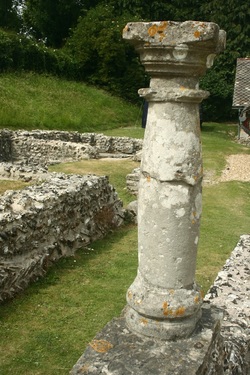
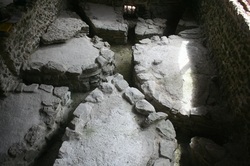
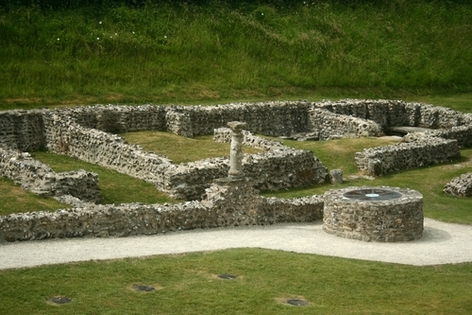
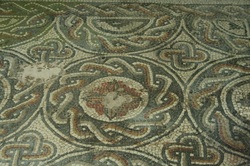
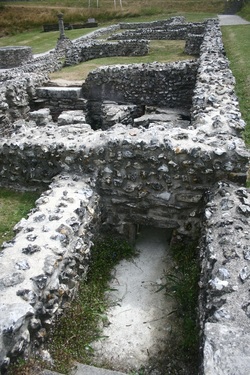
Well, apart from the roads, the aqueducts and the sewers, they also built villas and houses like this one, on the edge of Dorchester. Between 43 AD, when they kicked the Ancient Britons off nearby Maiden Castle, and 410 AD, when they upped sticks and went back to Italy, Dorset’s Roman conquerors did their best to make themselves at home. This particular des’ res’ just inside the walls of Roman Durnovaria is thought to have been built in the first decade of the 4th Century and comes complete with servants’ accommodation, mosaics and under-floor heating or hypocaust. Despite these “mod-cons”, over the centuries this Durnovarian Roman Town House was buried beneath the town that became Dorchester. Whiz forward to the 1930s and Dorset County Council bought Colliton Park as the site for its new offices. And it seemed like just the spot, until excavators started to unearth Roman columns and other bits and bobs. Cue the full-scale archaeological dig. Major finds. Protected status. And lo and behold the Council had to change their plans because the Romans had already “bagsied” the site. This confluence of events across some 1600 years means that today, anyone can walk around this very real Roman home. But it also means that it is in the most unlikely of locations, hidden away behind the main offices of the Dorset County Council. Best reached either through the County Library Car Park or by walking down “The Grove” and then turning right into Northernhay, this is not the most adrenaline filled trip you’ll ever do. But it is nonetheless well worth the visit. Partly because you won’t see this sort of thing for free very often and partly because if you have children it is a great place for them to engage with their school curriculum and learn things about the Romans through first hand experience. Pompeii this isn’t, but anyone who goes to the Dorchester Roman Town House will go away being able to say that they have seen a real Roman Mosaic, that they understand what a hypocaust is and how it works and that they have walked through the remains of rooms that were built and lived in by real Romans in a real Roman town. And if you want to bring the whole experience to life that little bit more, and glean even more information than is provided on the entry display boards, all you have to do is dial a reasonably affordable number on your mobile phone and you can have your own guided tour of this remarkable archaeological dig by recorded message on your phone! How cool’s that! As a visit, you could spend as little as 10 minutes or as long as a few hours and still gain something from the experience. And because it is free it’s an easy stop to fit in with other things to see and do in Dorchester and the surrounding area. If you want to slip a quiet moment into a spot of retail therapy in the town centre then this is a good place to do it and only a few minutes walk. You are also in easy striking distance of the Dorset County Museum where there’s lots more interesting stuff about the Romans and others who’ve been lucky enough to live in this part of Britain. There are also other Romano-British sites to visit at Maumbury Rings, Poundbury and Maiden Castle. But then that’s the beauty of a Town House, Roman or otherwise, you’re that much closer to everything that’s going on! |
Between 43 AD, when they kicked the Ancient Britons off nearby Maiden Castle, and 410 AD, when they upped sticks and went back to Italy, Dorset’s Roman conquerors did their best to make themselves at home ..."
|